AI & Deepfakes
AI and Deepfakes
Artificial intelligence (AI) has become a staple of consideration and discussion amongst the living, breathing human race. AI has developed

AI is changing our world faster than ever, and these interviews break down what that actually means for us. As AI becomes more advanced, the line between what’s real and what’s artificially generated gets harder to see, making it easier for deepfakes, manipulated media, and algorithm-driven misinformation to slip into our daily lives. These tools aren’t just cool or futuristic, they’re powerful, and in the wrong hands they can distort public opinion, amplify political divides, and contribute to democratic backsliding without us even noticing. Students told us they see AI-generated content every single day, especially on TikTok or Instagram Reels, and a lot of it blends in so well they don’t realize it at first. They said it’s scary how easily they can get tricked, and how powerful AI has become in shaping what people believe. Many mentioned how harmful it can be when AI creates false narratives about real people, making misinformation feel even more believable. That’s why conversations like this one matter. We want this TikTok to give viewers a quick, clear understanding of how AI can shape what we believe, even if it seems harmless at first.
Misinformation plays a huge role in democratic backsliding because it slowly breaks down trust, confuses the public, and makes it harder for people to separate truth from manipulation. In this TikTok, we tested how easily misinformation is accepted as truth and how easily it can spread by asking students how they felt about (the false story) of Father Peter retiring at the end of the year or Jay Wright returning as head basketball coach. Although these are two somewhat silly examples, what is troubling is how most students took what we said at face value without questioning it. When we told them it wasn’t true, many were surprised and realized how easily they believed it, which shows how quickly false information can be spread, even on a small scale. One student immediately questioned the Jay Wright claim—showing what healthy skepticism looks like! When we asked how they usually fact-check, students said they rely on checking multiple sources and making sure those sources are credible. Small habits like these are what help protect us against mis/disinformation and protect our democracy from further backsliding.
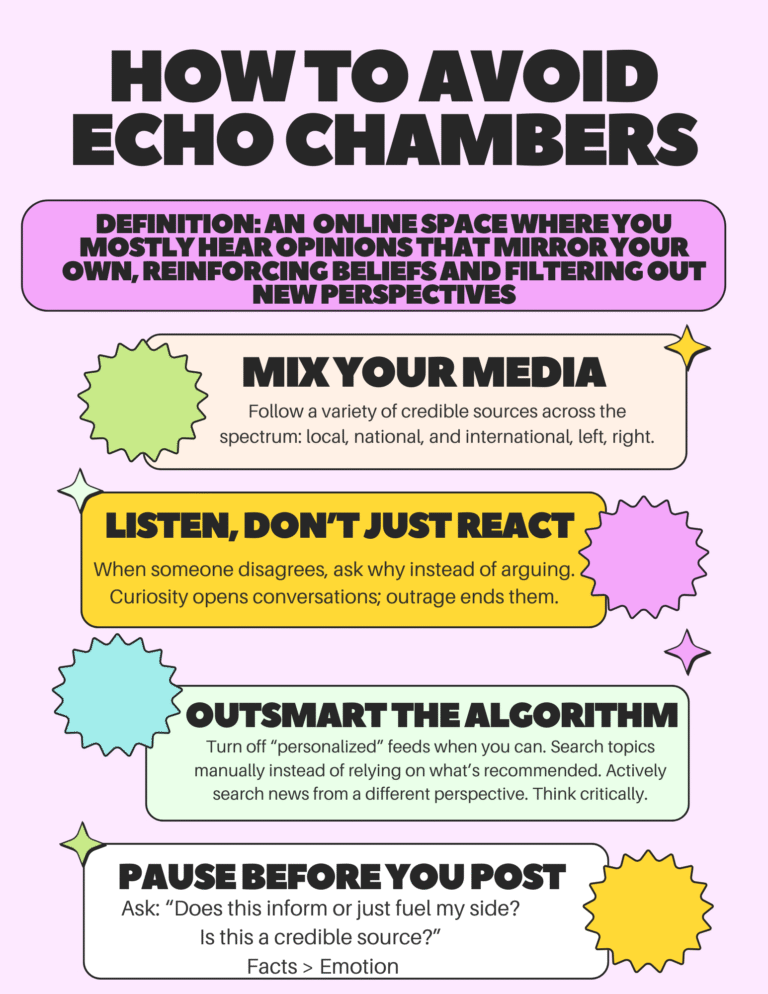
Echo chambers make the impacts of AI, deepfakes, and mis/disinformation even more dangerous. They trap people in spaces where they only see content that reinforces what they already believe. As algorithms personalize feeds and filter out opposing viewpoints, false or AI-generated information becomes easier to accept because it appears to “fit” what someone already thinks. This makes deepfakes and manipulated media even more convincing, allowing misleading narratives to spread faster and blend into everyday content without people realizing it. When individuals are only exposed to one side of an issue, their ability to think critically weakens, polarization grows, and trust in institutions breaks down, which are all major warning signs of democratic backsliding. Echo chambers don’t just shape opinions, they shape entire information environments, making it crucial to seek out credible sources, listen with curiosity, and pause before sharing so that misinformation loses its power.
Artificial intelligence (AI) has become a staple of consideration and discussion amongst the living, breathing human race. AI has developed
Due to the rise of social media, misinformation and disinformation are more prevalent than ever. In the digital age, information